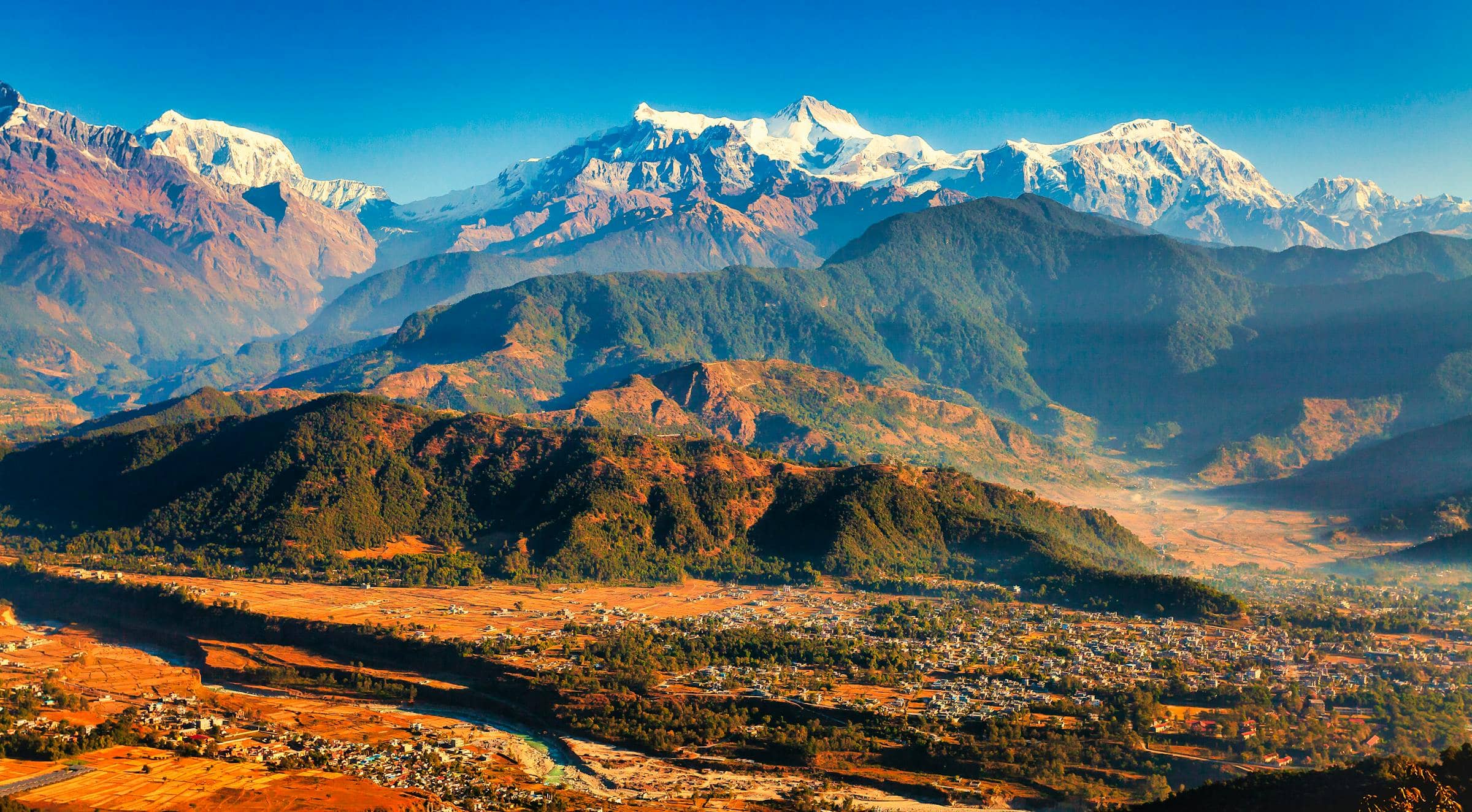
The mountains do not change, but the sky above them does — completely, four times a year. Choosing when to walk in Nepal matters almost as much as choosing where. A cloudless October morning and a grey monsoon afternoon are, in a real sense, two different Himalayas. Here is how the year breaks down, and the windows we actually put people on.
Autumn — the clearest window
October and November are the finest months to trek in Nepal, and it is not close. The monsoon has just washed the air clean and moved on, leaving crisp, stable skies and the sharpest mountain views of the year. Days are warm enough on the lower trail and cold but manageable up high. The rhododendron is gone, but the clarity more than makes up for it.
Autumn is the season we recommend first for all three of our signature treks — Everest Base Camp, the Annapurna Circuit and the Manaslu Circuit — and it is when most of our departures run. It is also, for the same reasons, the busiest season on the famous routes, which is one of the quiet arguments for Manaslu: a restricted trail stays uncrowded even in peak weeks.
Spring — the second-best, and the flowers
Spring is autumn's near-equal, and for some walkers its better. From March into May the rhododendron forests of the middle hills come into full bloom — whole hillsides of red and pink — and the days lengthen and warm. Views can be slightly hazier than in autumn as the pre-monsoon heat builds, but a clear spring morning in the high country is every bit as good.
The windows shift a little by route. We run Everest Base Camp in April and May, when the Khumbu is at its spring best and base camp itself is alive with expeditions preparing for the summit. Annapurna we favour in March and April, before the pre-monsoon haze thickens over the lowlands. Manaslu we keep to April in spring — a tighter window that threads between the tail of winter's snow on the Larkya La and the arrival of the monsoon.
Winter — cold, clear and quiet
December through February is not off the table, but it asks more of you. The high passes — the Thorong La on Annapurna, the Larkya La on Manaslu — can close or become genuinely difficult with snow, and the nights at altitude are hard. What winter offers in return is solitude and, on the clear days, extraordinary visibility.
We do not list winter among the recommended seasons for the high crossings, and we will say so plainly if you ask about a January departure on Manaslu. Lower-altitude walking and the approach stages can still be lovely in winter; the high passes are where we grow cautious. If your only free weeks fall in this window, talk to us — there are routes and shorter itineraries that suit the season, and we would rather redirect you than send you into snow you did not sign up for.
The monsoon — mostly not, with exceptions
From June into September the monsoon settles over the Himalaya. The trails turn wet and slippery, leeches appear in the forest, cloud swallows the views for days at a time, and the mountain flights that reach places like Lukla are frequently grounded. For the classic high routes, this is the season we steer people away from.
There is one honest exception worth knowing: the rain-shadow country north of the main Himalayan range — upper Mustang, and the far side of the Annapurna and Manaslu massifs — stays comparatively dry even in monsoon, because the great peaks wring the clouds out before they reach it. Those are specialist itineraries rather than the standard circuits, and we plan them as such.
The short version
If you can choose freely, walk in October or November. If autumn does not suit you, spring — roughly March to May, tuned to the route — is a beautiful second. Treat winter and the monsoon as conversations rather than defaults: possible for the right walk, but only with eyes open.
The truth is that the best season is the one that lines up with the trek you want and the time you can give it. Tell us the weeks you have and the walk you have in mind, and we will tell you honestly whether they fit — or which of the three to choose so that they do. Begin a conversation whenever you are ready, and we will plan a departure around the clearest sky we can find you.